 Korean Stock Insight
3 Reasons Korea’s ETF Boom Is Increasing Stock Market Volatility
3 Reasons Korea’s ETF Boom Is Increasing Stock Market Volatility
Korean ETF market volatility is becoming one of the most important themes for investors to watch. Korea’s ETF market has grown rapidly, and this growth is now changing how the broader stock market moves, especially when Samsung Electronics and SK Hynix decline.
1. Korea’s ETF Market Has Become Too Big to Ignore
Korea’s ETF market has entered a new era. According to recent market data reported by the Korea Exchange, the total net assets of domestic ETFs have surpassed 500 trillion won , marking a historic milestone for Korea’s capital market.
At first glance, this looks like great news. More ETF assets mean broader market participation, deeper liquidity, and more investment choices. But there is also a hidden side effect. When ETF money becomes this large, it can amplify market swings rather than simply follow them.
2. Samsung Electronics and SK Hynix Dominate Many ETFs
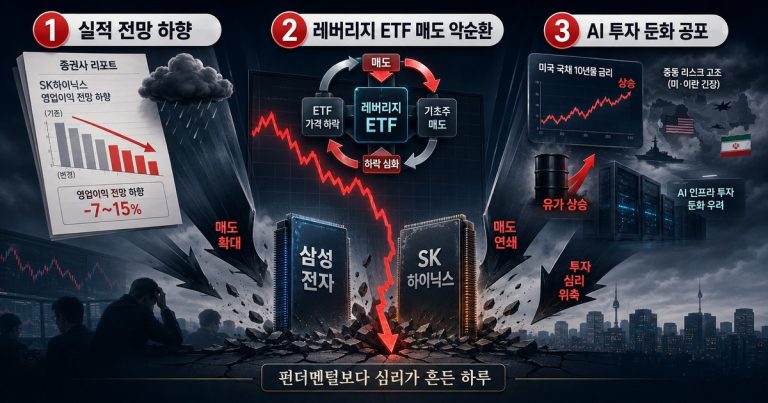
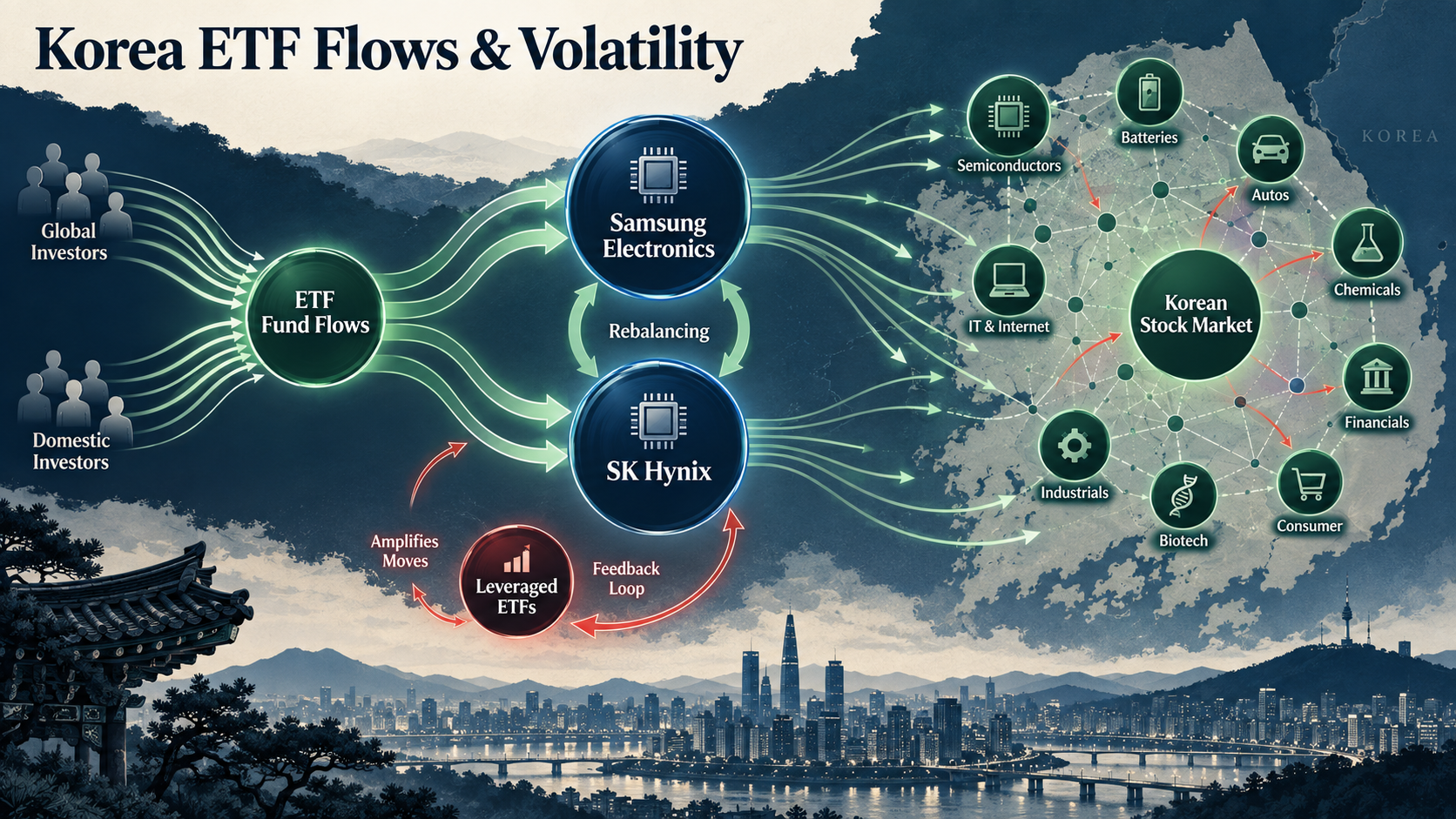
The key issue is concentration. Many Korean ETFs, especially index and semiconductor-related products, hold large positions in Samsung Electronics and SK Hynix. When these two heavyweight stocks decline, ETF managers may need to reduce exposure or rebalance their portfolios.
The problem does not stop there. To maintain target weights, ETFs can also end up selling other stocks mechanically. This creates additional pressure across the broader market and can turn a stock-specific decline into a market-wide sell-off.
3. Leveraged ETFs Can Intensify Short-Term Swings
The recent listing of single-stock leveraged ETFs linked to Samsung Electronics and SK Hynix may have intensified this feedback loop. Leveraged products often require more frequent rebalancing, which can increase short-term trading pressure during both rising and falling markets.
In simple terms, when Samsung Electronics and SK Hynix sneeze, the entire Korean market may catch a cold. ETF growth is not bad by itself, but when too much passive money follows the same mega-cap stocks, even passive investing can become a very active market force.
Internal Link
For a broader view of today’s market moves, read our latest market recap: Korea Stock Market Wrap – July 2, 2026 .
External Reference
Source for Korea ETF net assets surpassing 500 trillion won: Korea’s ETF Market Tops 500 Trillion Won .
Bottom Line
Korean ETF market volatility is likely to remain an important issue as ETF assets continue to grow. Investors should watch not only individual stock prices, but also ETF flows, rebalancing pressure, and the impact of leveraged ETF products on Samsung Electronics and SK Hynix.