 Korean Stock Insight
What Is KOSPI? A Complete Guide for Global Investors
What Is KOSPI? A Complete Guide for Global Investors
KOSPI is South Korea’s main stock market index and the most widely followed benchmark for Korean equities. For global investors, understanding KOSPI is one of the best starting points for understanding the Korean stock market, Korean ETFs, foreign investor flows, and Korea’s role in the global technology supply chain.
Quick Take
- KOSPI is South Korea’s main stock market index and the most widely followed benchmark for Korean equities.
- It represents many of Korea’s largest listed companies, including major players in semiconductors, autos, batteries, financials, shipbuilding, and consumer industries.
- Global investors watch KOSPI because Korea is deeply connected to global trade, memory chips, AI infrastructure, exports, currency movements, and foreign investor flows.
- KOSPI is different from KOSDAQ, which is more focused on growth stocks, biotech, technology, and smaller companies.
- Understanding KOSPI is one of the best starting points for anyone trying to understand the Korean stock market.
What Is KOSPI?
KOSPI, short for the Korea Composite Stock Price Index, is the main benchmark index of the South Korean stock market. It tracks the performance of companies listed on Korea’s main stock exchange market and is often used as the headline indicator for Korean equities.
When financial media say “the Korean stock market rose today” or “Korean stocks fell sharply,” they are usually referring to the KOSPI.
The index is operated by the Korea Exchange, commonly known as KRX, which is the main exchange operator in South Korea. KRX provides official market data, index information, trading statistics, and listed company data through its market data system. Readers can refer to the official Korea Exchange website for institutional market information.
For global investors, KOSPI is similar in role to the S&P 500 in the United States, the Nikkei 225 in Japan, or the FTSE 100 in the United Kingdom. It does not represent every company in Korea, but it serves as the most important broad-market signal for the country’s stock market.
Why KOSPI Matters to Global Investors
KOSPI matters because South Korea is not just a local market. It is one of the most important manufacturing, technology, semiconductor, battery, shipbuilding, and export-driven economies in the world.
Many global investors watch KOSPI for three main reasons.
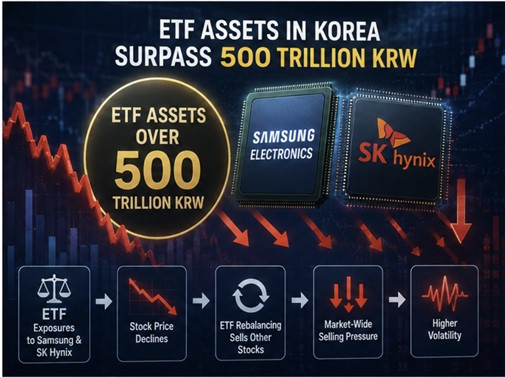
First, Korea is a major player in the global semiconductor supply chain. Companies such as Samsung Electronics and SK Hynix are closely tied to memory chips, HBM, AI servers, smartphones, data centers, and global technology cycles.
Second, Korea is highly sensitive to global liquidity and foreign investor flows. When global investors become more optimistic about technology, exports, or emerging Asian markets, Korean stocks can benefit quickly. But when investors reduce risk, KOSPI can also fall sharply.
Third, KOSPI often acts as a window into global manufacturing demand. Korean companies are active in autos, batteries, displays, chemicals, shipbuilding, machinery, consumer brands, financial services, and defense. This makes KOSPI useful for understanding not only Korea, but also the broader global industrial cycle.
What Types of Companies Are in KOSPI?
KOSPI is home to many of Korea’s largest and most established companies. These are often the companies that global investors recognize first when studying Korea.
1. Semiconductors
This is the most globally important part of the Korean equity market. Samsung Electronics and SK Hynix are central to the global memory chip industry. Their performance can strongly influence the direction of KOSPI.
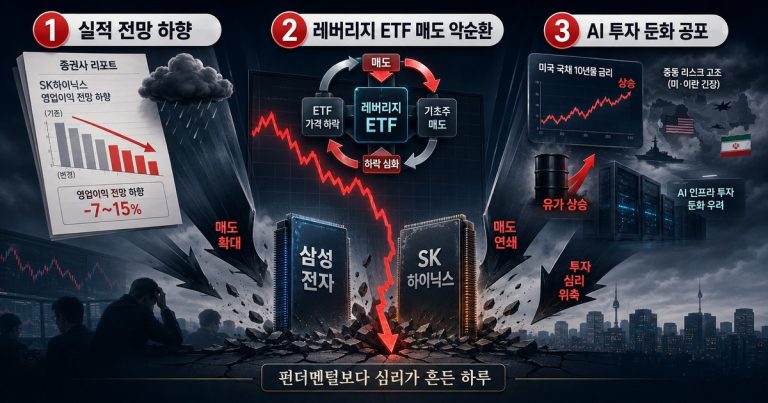
When memory prices rise, AI server demand increases, or HBM supply becomes tight, Korean semiconductor stocks often attract global attention. On the other hand, when investors worry about chip oversupply or technology valuation, KOSPI can come under pressure.
2. Automobiles and Mobility
Korea is also home to major automakers and auto parts companies. Hyundai Motor and Kia are globally recognized brands. Their stock performance is affected by electric vehicles, hybrid vehicles, U.S. sales, exchange rates, labor costs, and global consumer demand.
3. Batteries and Materials
Korea is one of the world’s key battery supply chain countries. Battery cell makers, cathode material companies, chemical companies, and equipment suppliers are important parts of the Korean market.
This sector can be volatile because it is tied to electric vehicle demand, lithium prices, China competition, U.S. policy, and global supply chain changes.
4. Financials
Banks, insurers, brokerages, and holding companies are also important in KOSPI. Financial stocks often respond to interest rates, credit conditions, shareholder return policies, and domestic economic trends.
5. Shipbuilding, Defense, and Industrials
Korea has globally competitive shipbuilders and industrial companies. Shipbuilding stocks can move strongly when LNG carrier demand, naval orders, or global shipping cycles improve.
Defense stocks have also become more important as Korean defense exports receive global attention.
6. Consumer, Biotech, and K-Culture Themes
KOSPI also includes consumer brands, cosmetics, entertainment-related companies, food companies, and healthcare names. These sectors may be influenced by Chinese demand, tourism, global K-culture trends, and domestic consumption.
KOSPI vs KOSDAQ: What Is the Difference?
One of the most important things for foreign investors to understand is the difference between KOSPI and KOSDAQ.
KOSPI is Korea’s main board. It is generally associated with larger, more established companies. These companies often have bigger market capitalizations, longer operating histories, and stronger institutional investor interest.
KOSDAQ is Korea’s growth-oriented market. It is often compared to Nasdaq because it includes many smaller technology, biotech, software, entertainment, gaming, healthcare, and high-growth companies.
| Feature | KOSPI | KOSDAQ |
|---|---|---|
| Market type | Main board | Growth market |
| Company profile | Large and established | Smaller and growth-oriented |
| Key sectors | Semiconductors, autos, financials, batteries, industrials | Biotech, software, small-cap tech, entertainment, materials |
| Volatility | Usually lower than KOSDAQ | Usually higher |
| Investor base | More institutional and foreign investor attention | More retail-driven |
| Global relevance | Strong through large exporters | Strong through themes and growth stories |
For long-term global investors, KOSPI is often the starting point. For investors looking for high-growth or theme-driven opportunities, KOSDAQ can be interesting but usually requires more caution.
Why Foreign Investor Flows Matter So Much
Foreign investors play a major role in the Korean stock market.
Because many large KOSPI companies are globally important exporters, foreign institutions often buy and sell Korean stocks based on global macro conditions. These include:
- U.S. interest rate expectations
- The U.S. dollar and Korean won exchange rate
- Global semiconductor demand
- China growth expectations
- AI infrastructure investment
- Emerging market fund flows
- Risk appetite in Asia
When foreign investors buy Korean stocks aggressively, KOSPI can rise quickly. When they sell, the index can fall sharply, especially if the selling is concentrated in large semiconductor names.
This is why daily market analysis in Korea often pays close attention to three investor groups:
- Foreign investors
- Institutions
- Retail investors
Foreign investors often dominate large-cap directional moves, institutions influence portfolio rotation, and retail investors are especially important in KOSDAQ and theme-driven stocks.
How KOSPI Reacts to the Semiconductor Cycle
For global investors, it is impossible to understand KOSPI without understanding semiconductors.
Korea is one of the most important countries in the global memory chip industry. Samsung Electronics and SK Hynix are deeply connected to DRAM, NAND, HBM, AI accelerators, smartphones, servers, and data centers.
When the semiconductor cycle improves, KOSPI often benefits. This can happen when:
- Memory chip prices rise
- HBM demand increases
- AI server investment expands
- Inventory levels normalize
- Global technology companies increase capex
- Earnings expectations improve
But the opposite is also true. When investors worry about oversupply, weaker demand, or crowded AI trades, KOSPI can become vulnerable.
This does not mean KOSPI is only a semiconductor index. But semiconductors are so large and globally connected that they often set the tone for the broader Korean market.
Key Factors That Move KOSPI
KOSPI is affected by both domestic and global factors. The most important drivers include:
1. U.S. Interest Rates
Higher U.S. rates can reduce global risk appetite and pressure emerging market equities. Lower rate expectations can support growth and technology stocks.
2. Korean Won Movement
A weaker Korean won can help exporters in some cases, but it can also signal foreign investor caution. Currency moves are especially important for foreign investors because they affect dollar-based returns.
3. Semiconductor Earnings
Samsung Electronics and SK Hynix have a major influence on market sentiment. Their earnings, guidance, capex plans, and HBM-related news can move the entire market.
4. Export Data
Korea is an export-driven economy. Export numbers, especially semiconductor exports, can influence investor expectations for corporate earnings.
5. China Demand
China remains important for many Korean sectors, including chemicals, cosmetics, autos, batteries, steel, and consumer goods.
6. Retail Investor Sentiment
Korean retail investors can drive strong moves in theme stocks, especially in KOSDAQ. However, retail sentiment can also influence broader market momentum.
7. Policy and Corporate Governance
Government policy, tax rules, short-selling regulations, shareholder return reforms, and corporate governance changes can affect market valuation.
How Can Global Investors Track KOSPI?
Global investors can track KOSPI in several ways.
The most direct way is to monitor official market data from the Korea Exchange. KRX provides index data, market statistics, and listed company information through its official data system.
Investors can also follow financial data platforms, brokerage platforms, global market news, and Korea-focused ETFs.
Common ways to track Korean market exposure include:
- KOSPI index data
- KOSPI 200 index data
- Korea-focused ETFs
- Samsung Electronics and SK Hynix share movements
- Korean won exchange rate
- Foreign investor net buying or selling
- Semiconductor export data
- Bank of Korea policy signals
- Korea Exchange market statistics
For investors who do not trade Korean stocks directly, Korea ETFs can be an easier way to gain exposure. However, ETF holdings, fees, liquidity, currency exposure, and concentration risk should be reviewed carefully.
What Are the Main Risks of Investing in KOSPI?
KOSPI can offer exposure to world-class companies, but it also comes with risks.
1. Semiconductor Concentration
Because large semiconductor stocks carry significant weight in the market, KOSPI can be heavily affected by the memory chip cycle.
2. Currency Risk
Foreign investors must consider the Korean won. Even if Korean stocks rise in local currency terms, returns can be reduced if the won weakens against the investor’s home currency.
3. Export Dependence
Korea’s economy is highly connected to global demand. Weakness in the U.S., China, Europe, or global technology spending can affect Korean earnings.
4. Geopolitical Risk
Korea faces geopolitical risks due to its regional location and North Korea-related uncertainty. Markets can react quickly to geopolitical headlines.
5. Retail-Driven Volatility
Some sectors can move sharply because of retail investor enthusiasm, short-term themes, or liquidity-driven trading.
6. Valuation Cycles
Korean equities can experience periods of undervaluation or sudden rerating. Corporate governance reforms, dividend policies, and shareholder return trends can influence valuation.
Is KOSPI a Good Starting Point for Understanding Korea?
Yes. For global investors, KOSPI is the best starting point for understanding Korea’s public equity market.
It shows how Korea’s largest companies are performing. It reflects global technology cycles. It captures foreign investor sentiment. It also provides a useful signal for Korea’s macroeconomic direction.
However, KOSPI alone is not enough.
To understand the full Korean market, investors should also study:
- KOSDAQ
- KOSPI 200
- Korean ETFs
- Foreign investor flows
- Semiconductor supply chains
- Battery and EV supply chains
- Korea’s policy and corporate governance reforms
- Retail investor behavior
- Sector-specific market rotations
KOSPI is the front door. But the full Korean market is much deeper.
FAQ
What does KOSPI stand for?
KOSPI stands for Korea Composite Stock Price Index. It is the main benchmark index for South Korea’s stock market.
Is KOSPI the same as the Korean stock market?
Not exactly. KOSPI is the main benchmark for Korean equities, but Korea also has KOSDAQ, KOSPI 200, sector indexes, thematic indexes, and many individual listed companies.
What is the difference between KOSPI and KOSDAQ?
KOSPI is the main market for larger and more established companies. KOSDAQ is a growth-oriented market with more small-cap, biotech, technology, and theme-driven stocks.
Why do global investors watch KOSPI?
Global investors watch KOSPI because Korea is deeply connected to semiconductors, AI infrastructure, exports, batteries, autos, global liquidity, and foreign investor flows.
Can foreign investors invest in KOSPI?
Foreign investors can access Korean equities through various channels, including local brokerage access, global brokerage services, depositary receipts, or Korea-focused ETFs. The exact method depends on the investor’s country, broker, account type, and regulatory requirements.
What sectors are most important in KOSPI?
The most important sectors include semiconductors, autos, batteries, financials, industrials, shipbuilding, chemicals, consumer goods, and healthcare.
Why is KOSPI sensitive to Samsung Electronics and SK Hynix?
Samsung Electronics and SK Hynix are among Korea’s most important listed companies and are deeply tied to the global semiconductor cycle. Their stock movements can strongly influence overall market sentiment.
Related Reading
- Start with our Korea Market Guide to understand KOSPI, KOSDAQ, investor flows, and Korea’s market structure.
- Read our Korea Market Wrap for daily updates on KOSPI, KOSDAQ, investor flows, and key sector moves.
- Explore our Korean ETF Guide for ETF-focused investors.
Disclaimer
Korea Stock Insight is for informational and educational purposes only. Nothing on this website should be considered personalized investment advice, financial advice, or a recommendation to buy or sell any security. Always conduct your own research or consult a qualified financial professional before making investment decisions.